
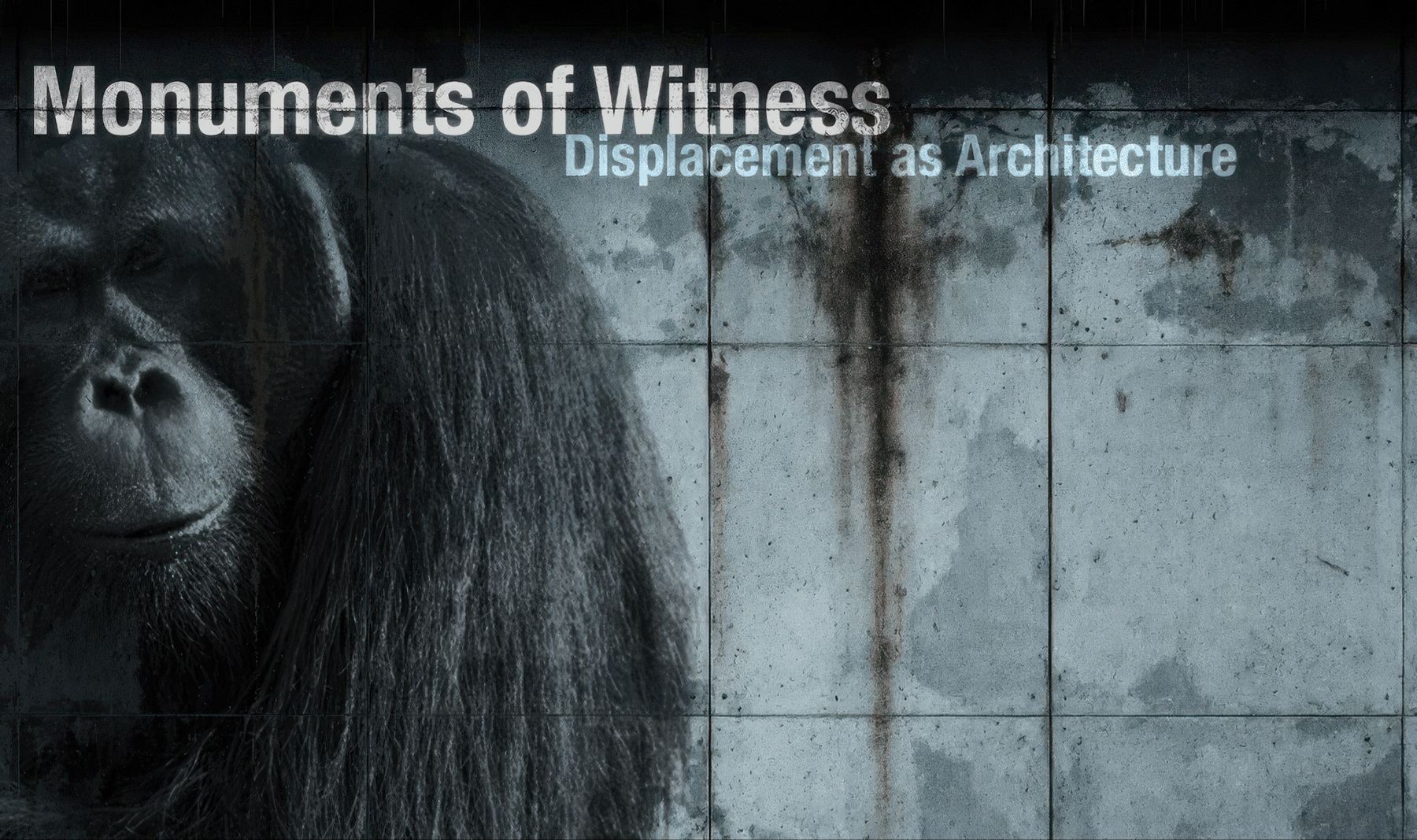
"Visual Concept Only: Represents intended scale and aesthetic. Final artwork will be adapted to suit the architectural environment."
Support Material Statement
The following material documents the evolution of a practice grounded in photographic craft and ecological inquiry, and situates Monuments of Witness within that trajectory.
For over two decades, my work has engaged the photograph as a contemplative object rather than a documentary record. Through long-form field research and traditional palladiotype printing, I have developed a materially grounded approach in which tonal restraint, surface sensitivity and scale contribute to the work’s psychological and ethical weight.
The 2008 orangutan image included here marks a formative moment in this trajectory. Produced during sustained engagement at the Nyaru Menteng rehabilitation centre in Borneo, the photograph operates as both encounter and witness. It has remained conceptually unresolved within the archive — a latent monument awaiting architectural form.
Subsequent large-scale prints demonstrate the refinement of this inquiry within the gallery context, where the photograph exists as an object of duration and stillness. These works establish the formal discipline and conceptual clarity that underpin the current proposal.
The architectural visualisation included in this material indicates a structural evolution: the translation of photographic witness into spatial presence. Rather than enlarging an image for illustrative effect, the project interrogates how displacement — ecological and architectural — can be inscribed onto the built environment itself.
Material testing documentation reflects a staged and methodical approach to this transition. The intention is not spectacle, but permanence; not decoration, but civic inscription.
Taken together, the material demonstrates continuity and escalation — from field encounter, to fine art object, to architectural-scale monument.
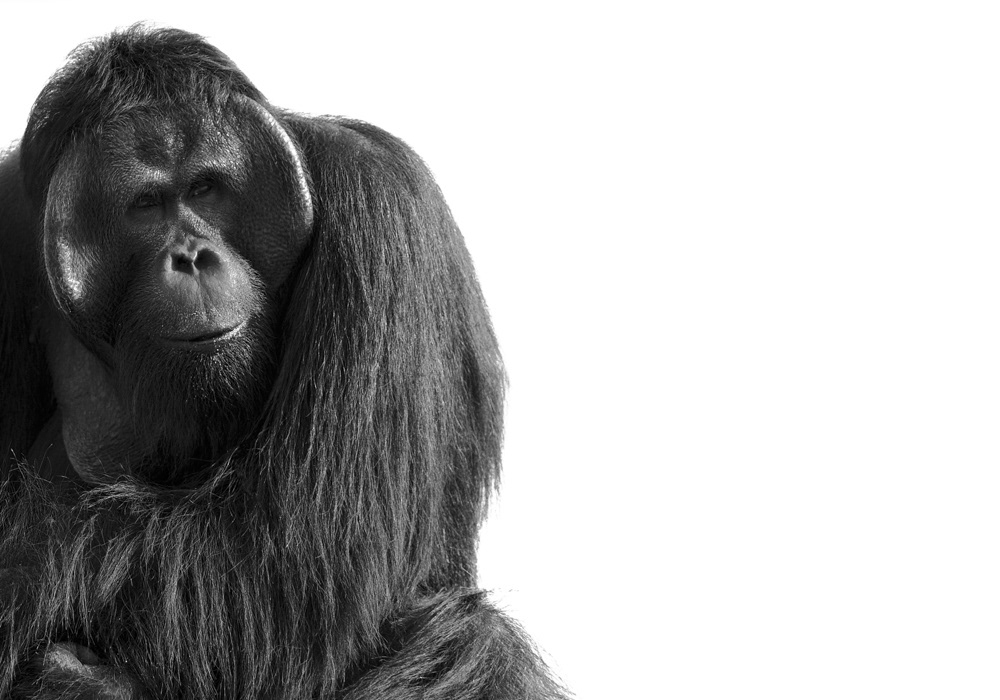
"Omega" ©LiamLynchPhotography ~ Image taken under permit at the Central Kalimantan Orangutan Reintroduction Program in Nyaru Menteng, Borneo in 2008.
As urban development accelerates and species decline intensifies globally, the question of what societies choose to preserve is increasingly urgent.
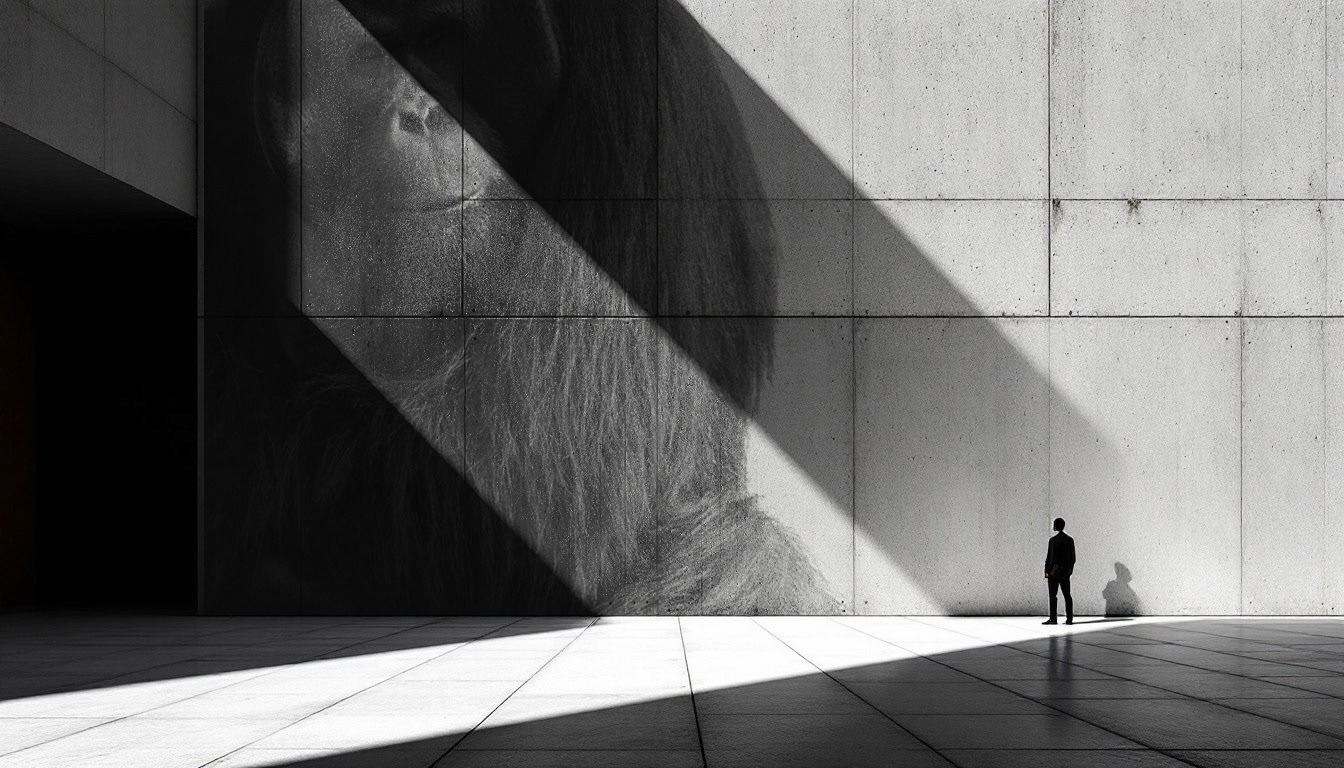
"Visual Concept Only: Represents intended scale and aesthetic. Final artwork will be adapted to suit the architectural environment."
Artist Bio
Liam Lynch is an Australian artist working across photography, film and architectural-scale image-making. His practice explores the relationship between image, surface and environment, drawing on long-term environmental fieldwork and material experimentation.
Born in Victoria, Lynch began his career assisting leading Australian fashion and advertising photographers before working internationally across Los Angeles, Paris, Amsterdam and Auckland. This experience established the technical precision and production discipline that continue to underpin his practice.
Since establishing his Melbourne studio in the late 1990s, Lynch has collaborated with architects, designers and cultural organisations, producing photographic and film works that combine conceptual clarity with material rigour.
Alongside this professional practice, he has developed an independent body of fine art work informed by field experience across the Asia–Pacific region. His projects have taken him from the rainforests of Sumatra and Borneo to the waters of the South Pacific, documenting fragile ecosystems and endangered species through patient observation and long-term engagement.
Working across large-scale pigment printing and traditional palladiotype processes, Lynch’s work explores the relationship between photographic image, material surface and presence. Recent projects extend this exploration beyond the framed image, investigating how ecological imagery can inhabit architectural and public space.
His work has been exhibited internationally and published widely in both print and digital media, including Australian Geographic and Capture Magazine. His images are held in public and institutional collections including state and national libraries across Australia and the Oxford University Press Library.
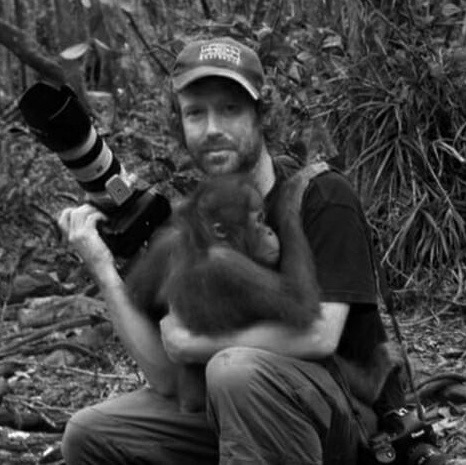
Liam at the Nyaru Menteng rehabilitation centre in Borneo 2008
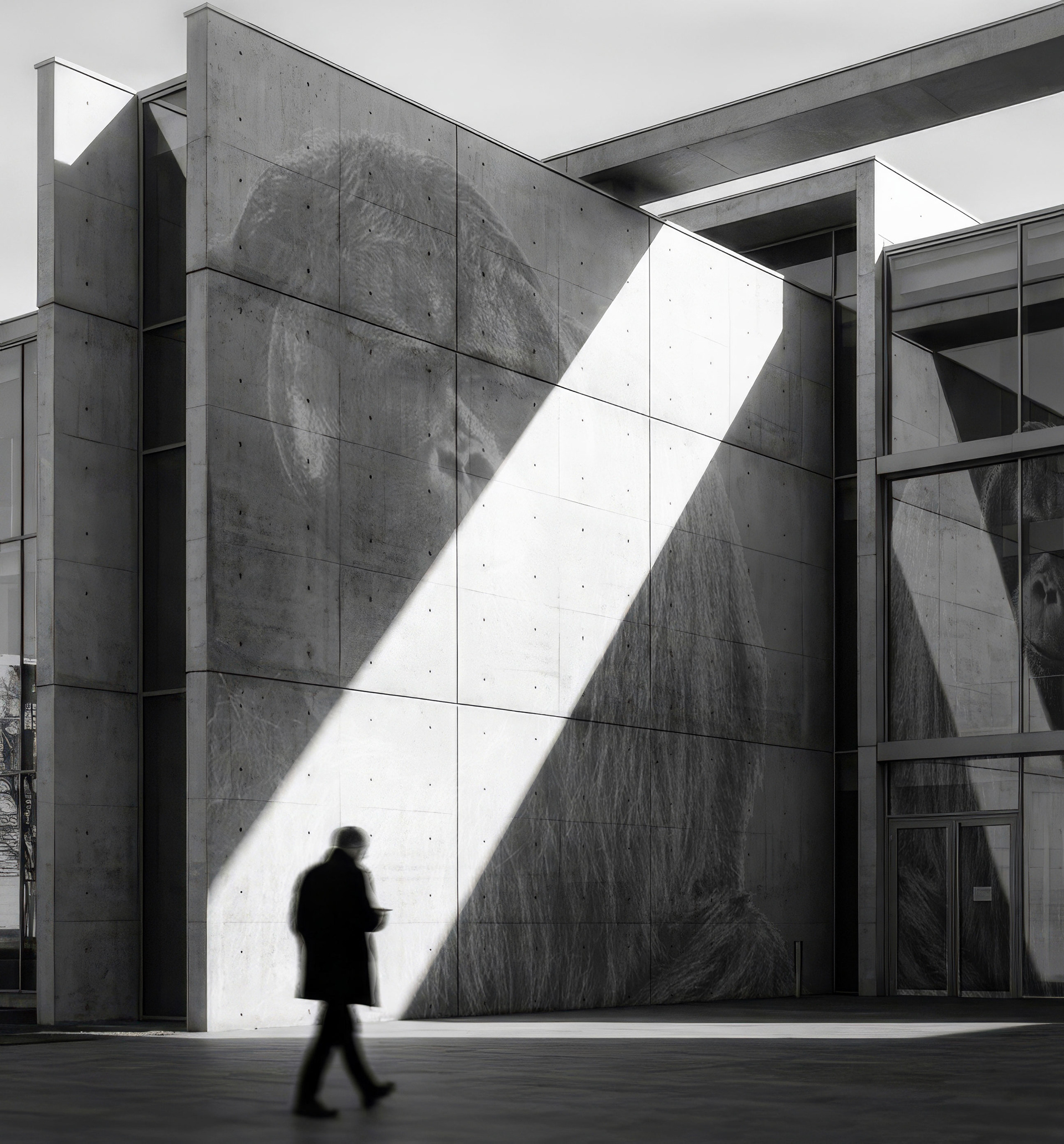
"Visual Concept Only: Represents intended scale and aesthetic. Final artwork will be adapted to suit the architectural environment."
Recent Work Samples
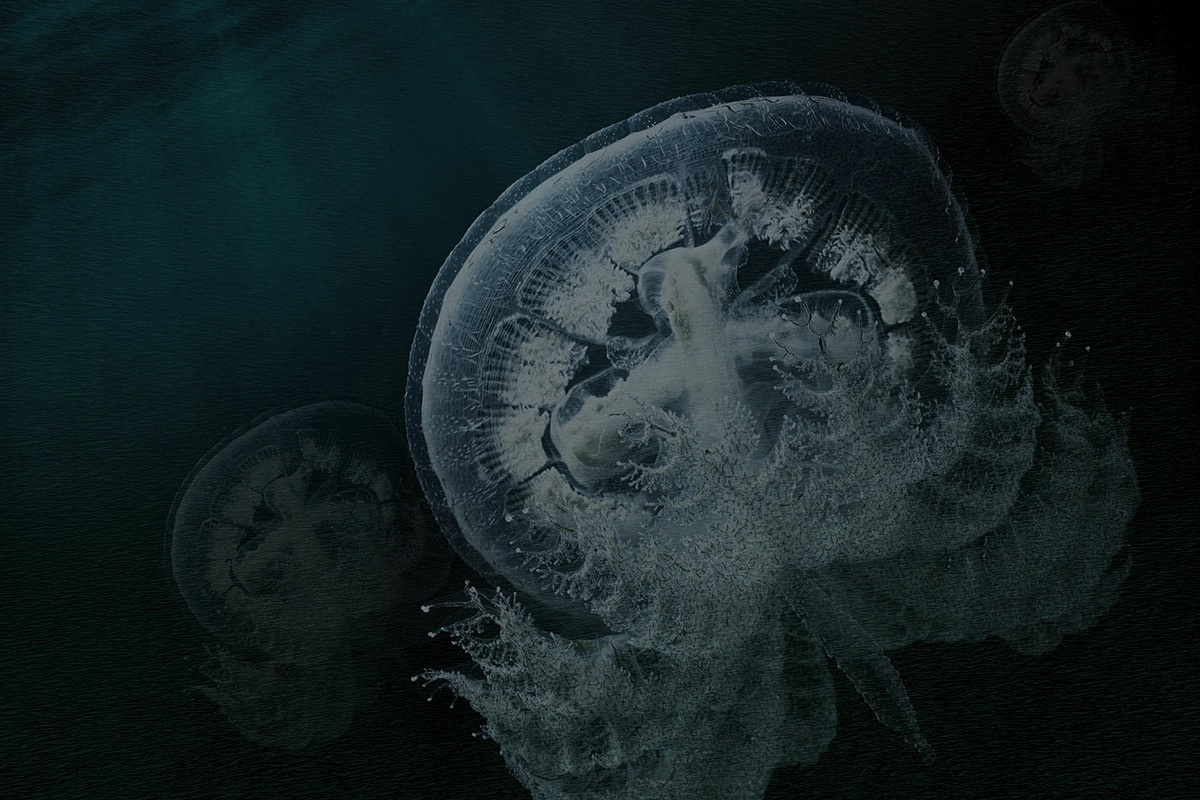
Original composit image design for Jellyfish ‘Ghost in the Current’ ©LiamLynchPhotography
Jellyfish ‘Ghost in the Current’
2026
Wall mural / large-format surface work
Materials: Non-woven paper reinforced with nylon fibres; non-reflective matte finish; washable and water-resistant; printed using natural, non-toxic, no-VOC colour compounds
Dimensions: 2.4 × 2.8 metres
Status: Completed
Wall mural / large-format surface work
Materials: Non-woven paper reinforced with nylon fibres; non-reflective matte finish; washable and water-resistant; printed using natural, non-toxic, no-VOC colour compounds
Dimensions: 2.4 × 2.8 metres
Status: Completed
Developed as a mural-scale surface work, ‘Ghost in the Current’ demonstrates Liam’s approach to translating marine imagery into durable, large-format applications for high-use environments. The composition and colour palette were designed in direct response to an existing architectural interior, with materials and production methods selected to withstand regular use within a commercial bathroom housed in a historic rural property. The work reflects a considered balance between visual clarity, material performance, and sensitivity to site-specific conditions.
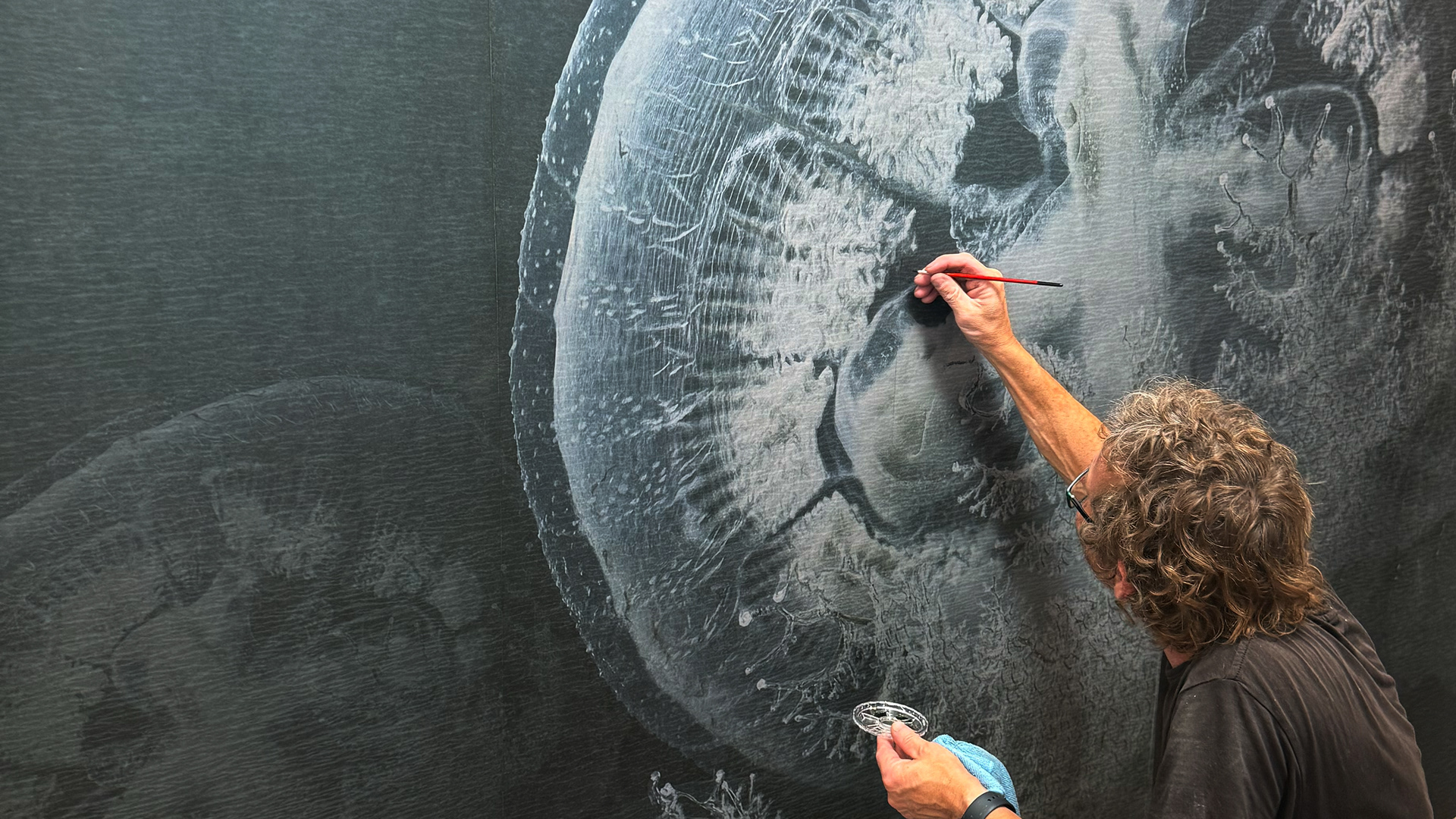
Final touches to Jellyfish ‘Ghost in the Current’ ©LiamLynchPhotography
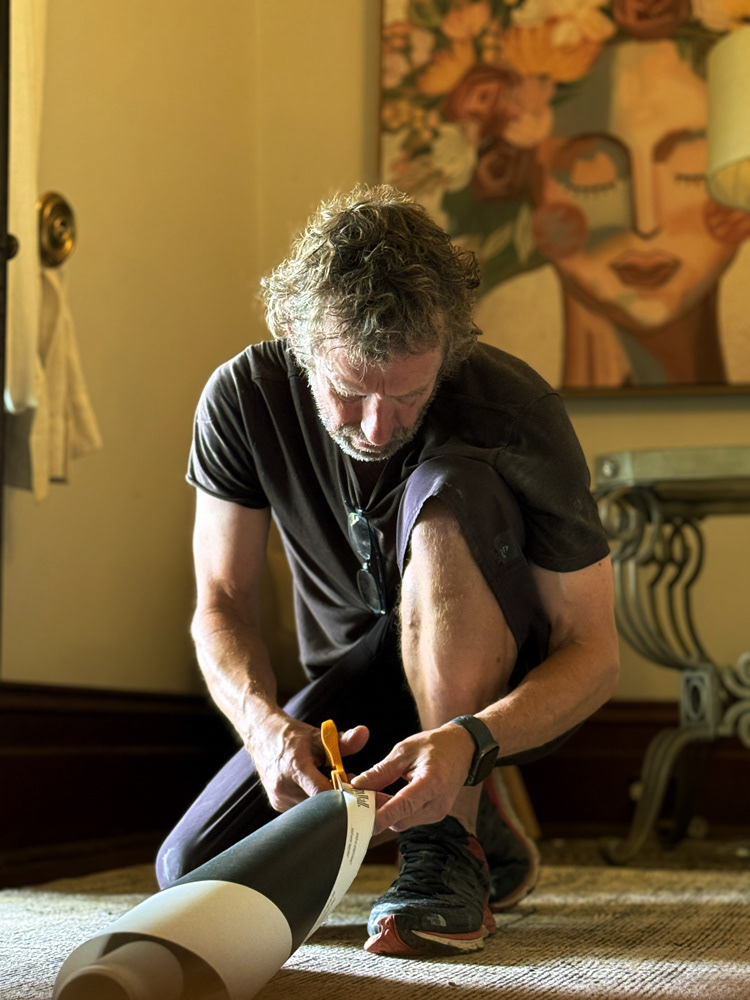
Production image for Jellyfish ‘Ghost in the Current’ ©LiamLynchPhotography
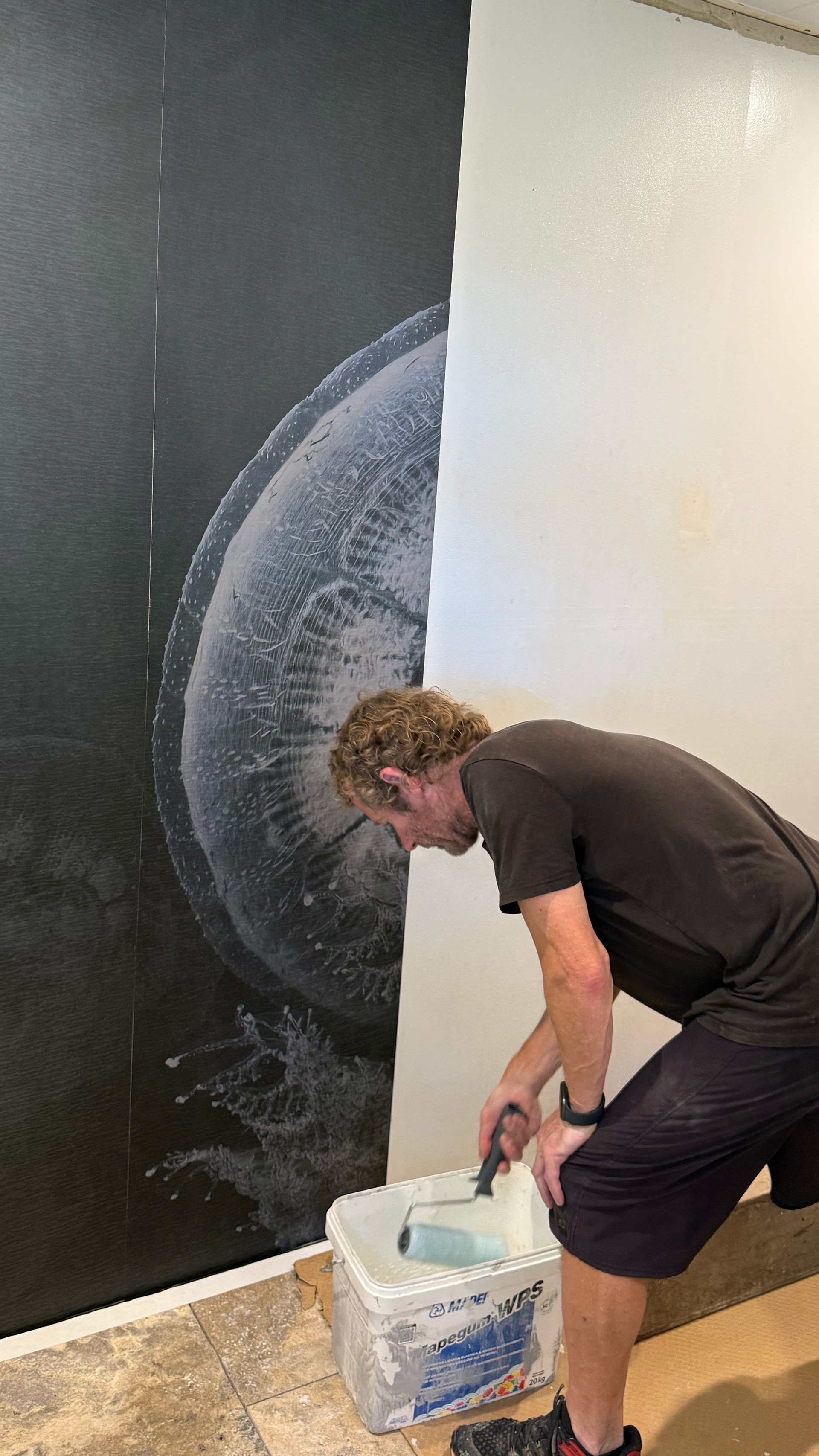
Production image for Jellyfish ‘Ghost in the Current’ ©LiamLynchPhotography
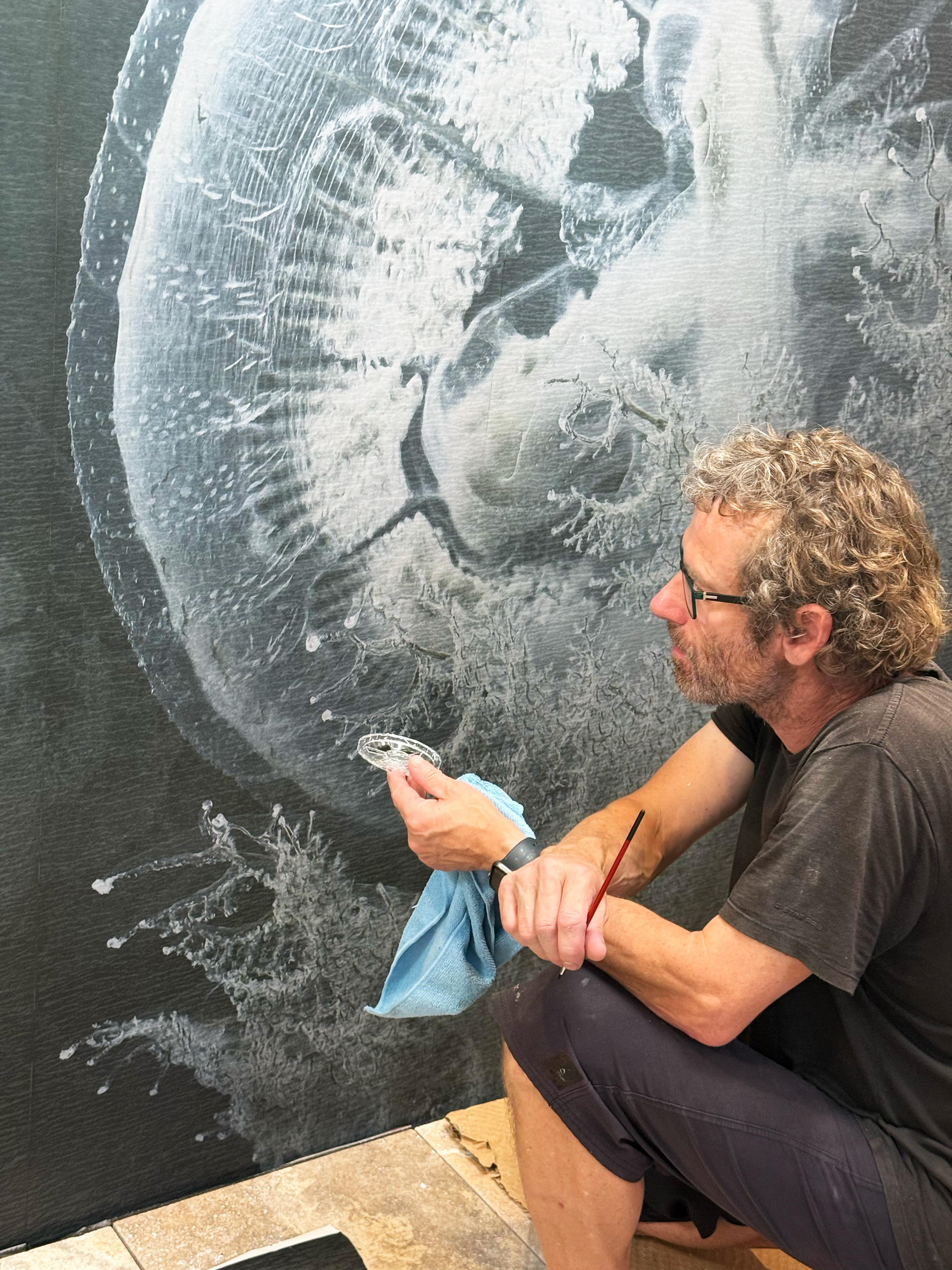
Production image for Jellyfish ‘Ghost in the Current’ ©LiamLynchPhotography
Exhibitions
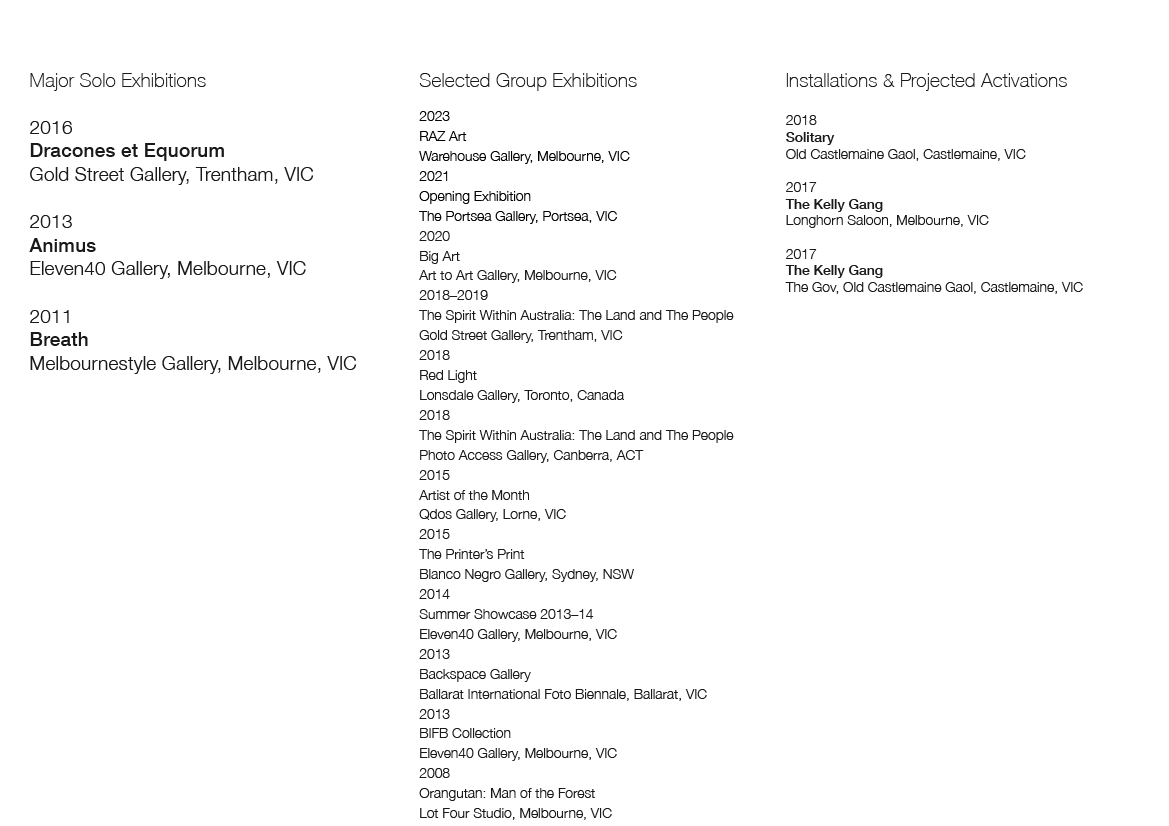
Interviews/Reviews
“Like many traditional processes, palladium works need to be seen in person to be fully appreciated. Each print is a handmade one-off and totes an impressive tonal range, which seems fitting to do justice to the incredible natural beauty that Lynch’s images capture.”
- Lachlan Gardiner
Capture Magazine July/ August 2014
Zoneone Arts brings Liam Lynch to you… Interview by: Deborah Blakeley, Melbourne, Australia, January 2026
Letters of Support
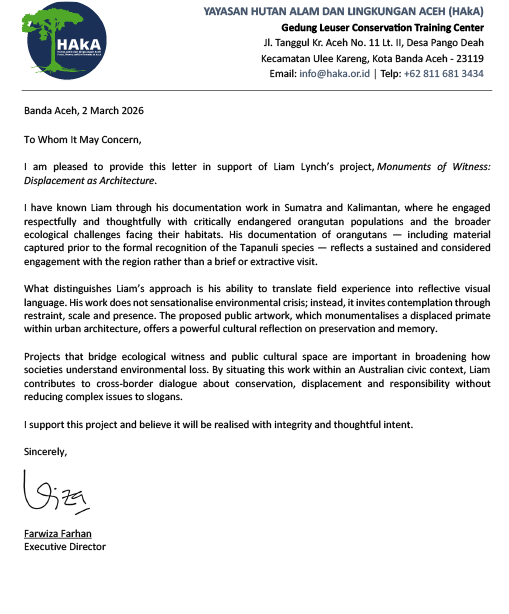
Letter of Support from Farwiza Fahan
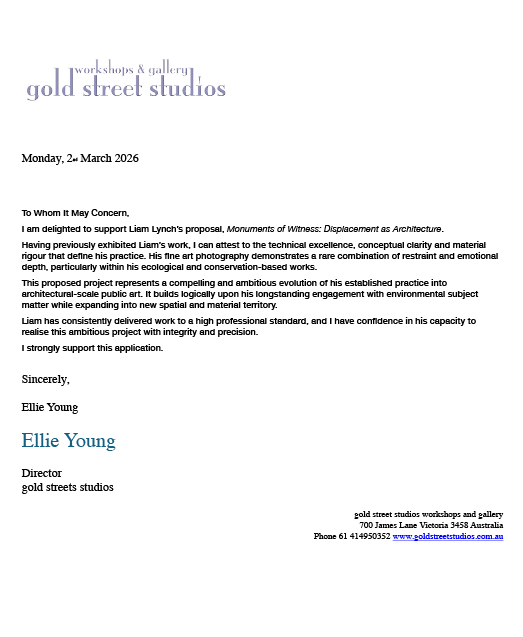
Letter of Support from Ellie Young
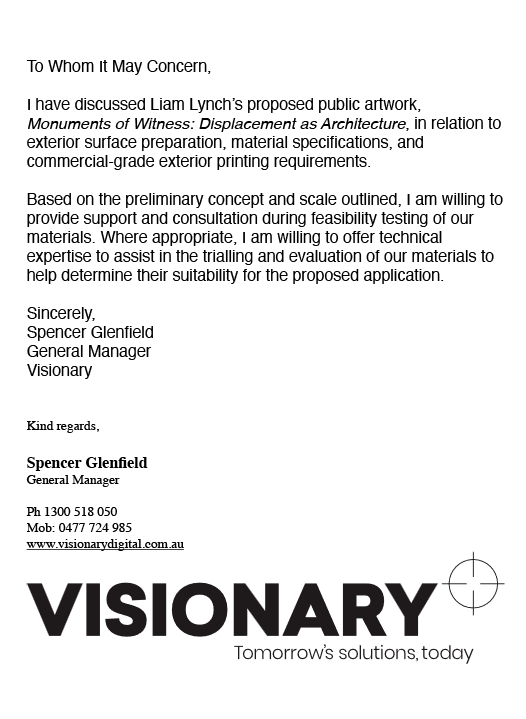
Letter of Support from Visionary
Conclusion
Monuments of Witness: Displacement as Architecture is a conceptually rigorous, ambitious and timely project that evolves my established ecological practice into architectural form. It combines artistic experimentation with structured delivery planning and ethical awareness.
By transforming ecological witness into civic monument, the work challenges assumptions about commemoration, preservation and responsibility — offering a public artwork that is both formally striking and conceptually grounded.
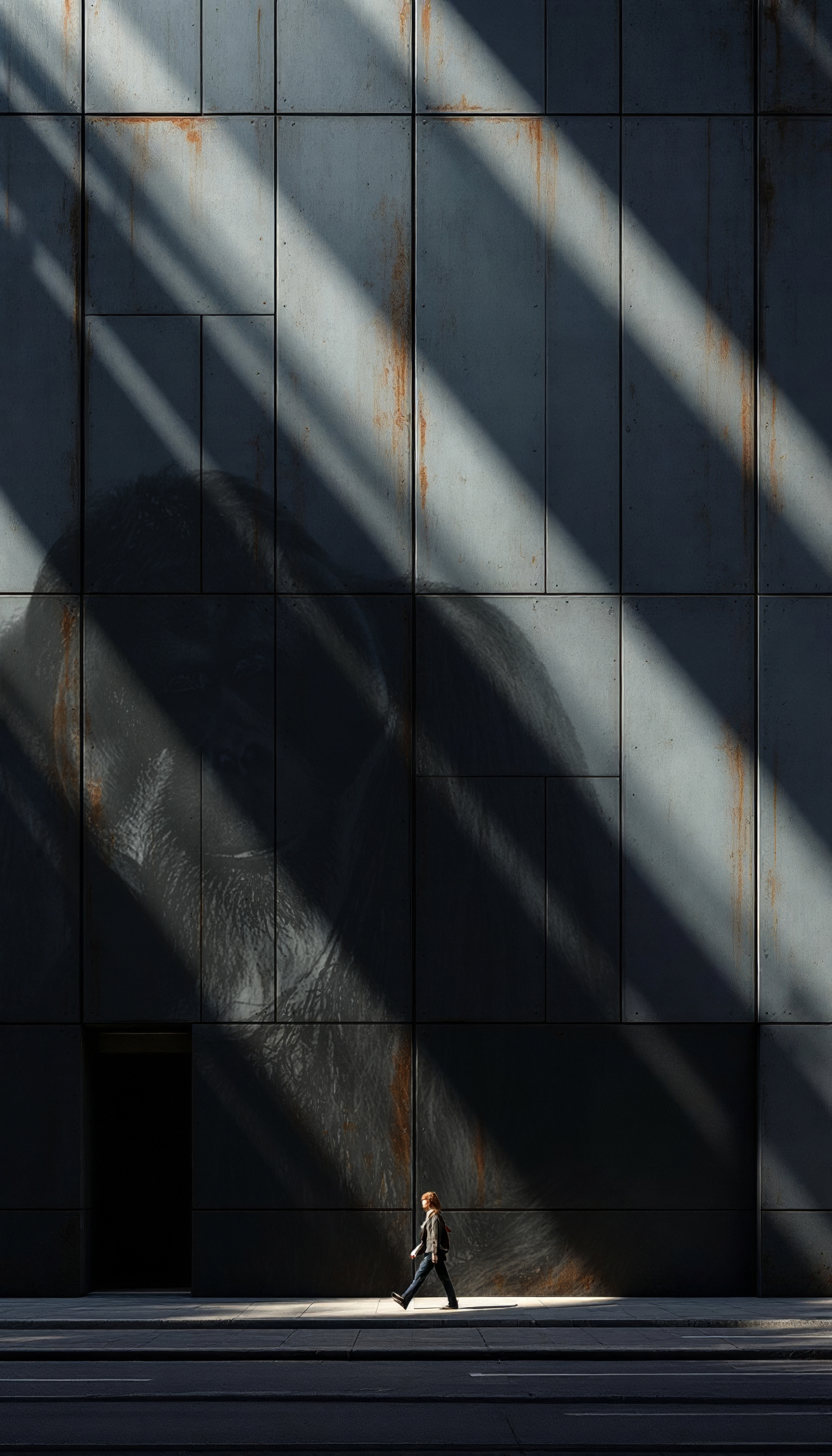
"Visual Concept Only: Represents intended scale and aesthetic. Final artwork will be adapted to suit the architectural environment."